
Create a Social Media Strategy
Produce an actionable social media strategy
- Avoid Being Overeager:
- Common mistake: Jumping into social media activities too quickly.
- Importance: Developing a strategy first to drive desired results.
- Define Goals:
- Identify what you want to achieve with social media.
- Align goals with organizational priorities (e.g., increasing referral traffic to career pages).
- Identify Audiences:
- Build marketing personas to describe different customer types.
- Understand customer demographics, challenges, and goals for personalized messaging.
- Content Topics and Formats:
- Define high-level themes relevant to your audience and business.
- Choose content formats (e.g., educational, entertaining, promotional) that align with your channels.
- Choose the Right Channels:
- Be active where your customers spend time.
- Avoid spreading yourself too thin; focus on impactful platforms.
- Programs, Campaigns, and Tactics:
- Programs: Ongoing initiatives.
- Campaigns: Short-term activities with start and end dates.
- Tactics: Specific actions to ensure programs and campaigns succeed.
- Estimate budget, resources, and staffing needed.
- Publishing Schedule:
- Organize content sharing timelines across an editorial calendar.
- Be clear on how often to share content on each channel.
Focus on social media measurement
- Importance of Measurement:
- No guarantees in social media marketing, but measurement increases chances of success.
- Consistently measure performance to focus on what’s working and shift away from ineffective activities.
- Meaningful Social Media Goals:
- Goals should be relevant, valuable, achievable, and measurable.
- Examples: Grow audience by 10% in 90 days, double conversion rate of paid campaigns by next quarter.
- Types of Social Media Goals:
- Conversions: Most important; includes sales and lead generation.
- Engagement: Indicates quality of interactions (e.g., shares, comments).
- Awareness: Measures reach and impressions; less critical but still useful.
- Tracking Progress:
- Choose complementary metrics and relevant measurement tools.
- Metrics should be industry-standard and easy to calculate.
- Examples: Follower count changes, impressions, views, reach.
- Measurement Tools:
- Use a mix of out-of-the-box analytics tools from social networks and third-party tools.
- Tools should help measure identified metrics and save time.
- Reporting:
- Generate reports daily, weekly, or monthly for each channel.
- Review reports after each campaign to assess performance and learn lessons.
- Look for elements that impacted performance positively for future use.
- Adapting Based on Insights:
- Use insights from reports to inform future social media activities.
- Focus on what resonates with your audience for continued success
Develop marketing personas for your audience
- Importance of Targeting:
- Trying to reach everyone on social media may result in reaching no one.
- Identifying your audience through marketing personas is crucial.
- Marketing Personas:
- Semi-fictitious profiles representing ideal customers.
- Include details based on experience and research into demographics, challenges, and goals.
- Data Sources:
- Observations, existing analytics (website, social media, CRM), formal market research (surveys, focus groups, ethnographic interviews).
- Creating Personas:
- Organize customers into groups with shared characteristics.
- Assign demographics and behaviors to define them.
- Example:
- A yoga studio might have personas like college students, working parents, and retirees based on class participation times.
- Naming Personas:
- Use specific nicknames (e.g., “Yogi Parents” for working parents).
- Demographics:
- Include age range, job title, education level, geographic location, personality traits, and interests.
- Behavioral Insights:
- Focus on behaviors and qualities influencing purchasing decisions.
- Identify unique challenges and goals.
- Communication Preferences:
- Determine where personas prefer to share information and their preferred news sources.
- List social media platforms, influencers, podcasts, publications, and newsletters they follow.
- Continuous Improvement:
- Personas are a work in progress.
- Use them to ensure social media campaigns target the right audience
Hire a social media manager
- Importance of Hiring a Social Media Manager:
- Unlocks the full potential of social media marketing.
- Provides the necessary expertise and effort for success.
- Ensures proper support and avoids lackluster results.
- Roles and Responsibilities:
- Strategy:
- Contributes to defining and executing social media strategy.
- Provides feedback on what’s achievable.
- Keeps the strategy ambitious, modern, and differentiated.
- Content Creation:
- Develops engaging text, photos, graphics, videos, etc.
- Balances proactive (initiating conversations) and reactive (responding to trends) content.
- Example: Weight Watchers’ proactive content (recipes) and reactive content (responding to food trends).
- Community Management:
- Maintains strong relationships with customers and partners.
- Ensures consistent engagement to build trust.
- Activities may include responding to comments and providing exclusive discounts.
- Strategy:
- Variability in Focus:
- Depends on the type of organization, company size, marketing complexity, and audience size.
- Example: A small nonprofit’s manager may handle multiple platforms, while a global brand’s manager may focus on one platform like TikTok.
- Key Contributions:
- Hands-on experience with strategies that drive results.
- Awareness of the latest social media developments.
- Insight into how other companies use social media
Choose the Right Social Networks
Community-based social networks
- Choosing the Right Channels:
- Focus on channels that make sense for your organization to reach customers.
- Avoid spreading resources thin by maintaining the wrong networks.
- Types of Social Channels:
- Different types with unique use cases, strengths, and weaknesses.
- Community-Based Social Networks:
- Examples: Facebook, Instagram, Twitter, LinkedIn.
- Users populate content by following accounts (friends, family, coworkers, etc.).
- Used for posting updates, communicating, and staying updated.
- Business Benefits:
- Ability to advertise to a vast audience of engaged users.
- Personalized content and sophisticated targeting.
- Platform-Specific Insights:
- Facebook:
- Good for sharing text, links, videos, images, and events.
- Success often found in paid advertising campaigns.
- Meta’s integration allows targeting across platforms.
- Instagram:
- Highly visual; ideal for images and short-form videos (stories, reels).
- Effective for companies selling visually appealing products (clothing, jewelry, beauty products, etc.).
- Twitter:
- Known for text-based messages (Tweets) and fast-paced conversations.
- Currently in transition; brands are cautious about its future role.
- LinkedIn:
- Professional network for job seekers, industry connections, and skill improvement.
- Ideal for B2B organizations targeting professionals based on their titles.
- Facebook:
Discovery-focused social platforms
- Overview:
- Platforms designed for entertainment and inspiration.
- Users discover content based on interests rather than connecting with people they know.
- Examples: TikTok, YouTube, Twitch, Pinterest.
- User Engagement:
- Users spend significant time discovering content.
- Advanced algorithms recommend content.
- Majority of content is created by a small percentage of users (creators and businesses).
- Platform-Specific Insights:
- TikTok:
- Known for short-form videos with audio.
- Popular for trending challenges and memes.
- Businesses benefit by working with creators, advertising user-generated content, creating original sounds, and developing video series.
- YouTube:
- Google-owned platform for videos on various subjects.
- Businesses can launch channels for original programming.
- Videos can rank in Google search results.
- Advertisers can target audiences with ads before, during, or after videos.
- Twitch:
- Live streaming network primarily for video game broadcasts.
- Also hosts cooking shows, DJ sets, talk shows, and eSports coverage.
- Businesses can reach younger audiences (16-34) through ads or sponsoring streamers.
- Less saturated, offering opportunities to stand out.
- Pinterest:
- Visual search engine for discovering and organizing images (Pins).
- Popular for ideas on weddings, interior design, recipes, etc.
- Ideal for companies selling visual consumer products.
- 85% of weekly Pinners purchase items based on Pins seen from brands.
- TikTok:
- Business Opportunities:
- Earn organic visibility and advertise to new audiences.
- Pair messaging with the entertaining experiences users expect.
Social messaging apps
- Overview:
- Social messaging apps enable private communication between individuals, groups, and businesses.
- Examples: WeChat, Facebook Messenger, WhatsApp, Snapchat.
- Offer functionalities like texting, bill payments, product purchases, and video chats.
- WeChat:
- Chinese messaging app, often called a “super app”.
- Features: Communicate with friends, pay bills, buy products, video chat.
- Key for reaching consumers in China due to the blocking of other major apps.
- Business strategies: Publish content, invest in advertising, work with key opinion leaders, create mini programs.
- Facebook Messenger and WhatsApp:
- Owned by Meta, used for customer service.
- Features: Real-time customer queries, canned responses, automated chatbots.
- Business strategies: Targeted advertising, custom integrations like branded chatbots.
- Snapchat:
- Pioneered disappearing private messages.
- Features: Public content from select publishers, short video ads, branded lenses and filters.
- Not commonly used for customer service due to expiring content.
- Business Opportunities:
- Deliver customer service via manual responses or automated chatbots.
- Launch ads to reach new and existing customers.
- Encourage direct messages as a call to action.
- Trends:
- Increasing shift from public to private channels.
- Importance of being where your audience is most active.
Review sites and discussion forums
- Trust in Recommendations:
- Consumers trust recommendations from other people over ads.
- Review sites and discussion forums are key for crowdsourcing information and making informed purchasing decisions.
- Review Sites:
- Examples: Yelp (restaurants, local businesses), TripAdvisor (travel experiences), G2 (business software), Google Business Profile, OpenTable, Amazon, Facebook.
- Benefits:
- Collect valuable feedback to improve offerings.
- Build trust in products and services.
- Steps to Utilize:
- Identify relevant review sites for your industry.
- Complete a business profile with details (description, images, contact info).
- Encourage customers to leave reviews.
- Feature positive reviews in marketing.
- Respond to negative reviews thoughtfully and offer solutions.
- Discussion Forums:
- Examples: Reddit, Quora, Stack Overflow.
- Characteristics:
- Users ask and answer questions anonymously.
- Honest and raw conversations lead to authenticity.
- Advertising:
- Brands can advertise on forums to build trust and reach the right audience.
- Less inundated with ads compared to other social networks.
- Business Strategies:
- Use review sites to gather and showcase customer feedback.
- Engage with customers by responding to reviews.
- Advertise on discussion forums to gain attention and build trust.
Publishing Engaging Social Content
Create organic content for social media
- Unique Aspect of Social Media:
- Ability to quickly get your message in front of many people, often for free.
- Organic content refers to free-to-publish posts (videos, text, images) without guaranteed visibility.
- Value of Organic Content:
- Affordable way to stay in touch with customers long-term.
- Important to share valuable information that customers want to receive.
- Content Themes:
- Identify 3-5 overarching content themes to guide your social media posts.
- Example: A company selling bedsheets and pillows might focus on:
- Funny commentary related to sleeping.
- Giveaways.
- Updates from retail locations.
- Philanthropic causes.
- Sleep-related how-to series.
- Engaging Topics:
- Stories should be promotional, entertaining, educational, or a combination.
- Aim to make content enjoyable, useful, or express a viewpoint to engage customers.
- Relevance to Customers:
- Ensure topics are relevant to your customers’ interests and challenges.
- Use marketing personas to guide topic selection.
- Complementary Topics:
- Topics should align with what your company does and its expertise.
- Example: A bedsheet brand making jokes about duvet covers or offering styling advice.
- Editorial Calendar:
- Develop an editorial calendar to organize and plan your social media posts.
- Helps balance activities across themes and channels.
- Saves time by pre-planning content while allowing for real-time posts.
Produce engaging paid social campaigns
- Targeting:
- Paid social advertising allows targeting specific audiences at scale.
- Ads are placed on social media channels to reach a specific audience.
- Effective for quickly reaching more customers and testing ad variations.
- Ad Format:
- Ads resemble organic posts but are labeled as ads.
- Less disruptive compared to other forms of advertising.
- Campaign Goals:
- Define the goal: awareness (video views, impressions), engagement (clicks, comments), or conversions (sales, signups).
- Specify target audiences without narrowing too much initially.
- Ad Creation:
- Produce compelling images or videos with engaging copy and a call to action.
- Ensure ads align with brand guidelines and platform-specific ad formats.
- Ad units have character limits and video duration/file size requirements.
- Budgeting:
- Set a budget based on desired outcomes and company resources.
- Adjust budget based on campaign performance.
- Initial campaigns involve experimentation across platforms.
- Monitoring and Optimization:
- Regularly monitor ad performance.
- Adapt future campaigns based on performance insights.
- Use Cases:
- Support the launch of a new business or product line.
- Gain awareness, traffic, engagement, leads, and sales at any stage of company maturity.
Humanize your content
- Authenticity:
- Consumers prefer authentic, raw content over polished, highly produced branding.
- Show behind-the-scenes challenges, processes, beliefs, and people behind the brand.
- Building Trust:
- Humanizing your brand helps you stand out with a unique point of view.
- Establish and consistently communicate your brand’s values and perspective.
- Examples:
- Ben & Jerry’s: Posts about new flavors and social issues aligned with their values (e.g., voting barriers, climate change).
- Authenticity can also mean using self-deprecating humor or featuring employees regularly.
- Strategies to Humanize Content:
- Showcase Your Team: Feature employees and company leadership on social media.
- Example: Founder hosting a livestream or employees using products.
- Involve Customers: Collaborate with customers in social campaigns, feature their contributions, and reward participation.
- Accessibility: Ensure content is accessible to a diverse audience (e.g., closed captions, alternative text for images).
- Showcase Your Team: Feature employees and company leadership on social media.
- Benefits:
- More relatable and trustworthy content.
- Builds a stronger connection with your audience.
- Encourages dialogue and participation from customers.
Interact with Customers
Embrace social listening and monitoring
- Importance of Listening:
- Essential for engaging in meaningful conversations with customers.
- Provides valuable feedback, enhances customer service, and helps manage reputation.
- Social Media Monitoring vs. Social Listening:
- Social Media Monitoring:
- Tracking conversations about your brand specifically.
- Helps address customer service concerns and adapt to feedback.
- Example: A restaurant chain reviewing social media for questions about their menu items.
- Social Media Listening:
- Analyzing broader discussions about your industry and relevant topics.
- Helps understand consumer perceptions, analyze competitors, and stay culturally relevant.
- Example: Identifying food trends in certain regions.
- Social Media Monitoring:
- Tools for Monitoring and Listening:
- Social Media Monitoring Tools:
- Sprout Social, Hootsuite.
- Set alerts for specific keywords like brand names and products.
- Helps manage mentions and feedback.
- Social Media Listening Tools:
- Meltwater, Brandwatch, Sprinklr.
- Analyze conversations across industries at scale.
- Identify trending discussions and decide on real-time reactions.
- Social Media Monitoring Tools:
- Reporting:
- Social Monitoring Reports:
- Curate mentions of your brand and related terms.
- Understand consumer reactions and identify who needs a response.
- Social Listening Reports:
- Identify trends in conversations around important topics.
- Stay up-to-date and decide when to participate in discussions.
- Social Monitoring Reports:
- Benefits:
- Demonstrates care for customer input.
- Fosters a connection with customers.
- Helps stay informed and make well-informed responses.
Proactive engagement to earn attention
- Definition:
- Proactive engagement involves starting conversations on social media to earn positive attention for your brand.
- It includes initiating discussions or joining broader, relevant conversations to provide value and share expertise in real-time.
- Goals:
- Earn meaningful engagement and attention.
- Educate and entertain customers.
- Position your company as a thought leader on relevant topics.
- Examples:
- TurboTax:
- Starts a discussion on financial literacy for teens on Instagram.
- Joins conversations about new tax legislation on YouTube to explain its impact on small businesses.
- Lidl:
- Shares a series on LinkedIn called “Lidl Expats” about employees’ experiences with job rotation, highlighting global mobility and employee development.
- TurboTax:
- Key Considerations:
- Lead conversations on topics providing tangible value to customers.
- Align discussions with your company’s values and long-term leadership goals.
- Avoid topics that do not align with your brand or provide value.
- Benefits:
- Strengthens brand reputation.
- Builds trust with the audience.
- Encourages others to join the discussion.
- Questions to Ask Before Engaging:
- Is the topic relevant to what our company offers or our expertise?
- Can we add value to the conversation that is entertaining or educational?
- Is it appropriate for our brand to discuss this subject?
Reactive engagement for customer service
- Importance of Reactive Engagement:
- Responding to customers on social media is crucial for improving customer loyalty and strengthening your reputation.
- Acknowledging and resolving customer issues in a public forum shows that their feedback is valued.
- Definition:
- Reactive engagement involves responding to direct outreach from customers who contact your company first, often for customer service support or feedback.
- Handling Unproductive Commentary:
- Ignore and block trolls or harmful, irrelevant comments.
- Goals:
- Retain customers by consistently answering their questions and resolving issues.
- Foster loyalty over time through effective customer service.
- Example:
- Spotify Cares Twitter Account:
- Used since 2012 to help customers troubleshoot issues both publicly and privately.
- Publicly acknowledge the customer’s tweet and then move the conversation to direct messages for privacy.
- Spotify Cares Twitter Account:
- Steps for Effective Reactive Engagement:
- Social Monitoring:
- Keep track of messages, comments, and reviews on platforms like Facebook, TikTok, Instagram, Twitter, Yelp, or Google Business profile.
- Addressing Inquiries:
- Respond to all constructive questions, complaints, and requests.
- Aim to resolve issues with the initial response or move to private messaging if needed.
- Public Acknowledgment:
- Always acknowledge outreach publicly to show active engagement.
- Ensure others see that you are responsive to customer concerns.
- Social Monitoring:
- Speed and Quality of Response:
- Respond within 24 hours to meet customer expectations.
- Balance speed with providing quality information and personalized care.
- Crafting Responses:
- Responses should be conversational, professional, concise, and require minimal effort from the customer.
- Example: Address the customer by name, apologize for the inconvenience, move to private messaging, and assure resolution.
- Acknowledging Positive Feedback:
- Thank customers for friendly comments or feedback and indicate how their input will be used.
- Outcome:
- Strengthen brand loyalty by providing world-class customer care on social media with meaningful responses that quickly resolve pressing issues.
Foster Social Media Partnerships
Coordinate teams with a social media policy
- Importance of Coordination:
- Social media success often results from group efforts.
- Led by the social media manager and marketing, but involves multiple teams.
- Ensures social media strategy supports key initiatives across departments.
- Creating a Social Media Policy:
- A corporate document distinct from a social media strategy.
- Establishes guidelines for how employees use social media on behalf of the organization.
- Outlines rules for all company activities on social media, including employee advocacy, marketing, legal, and public relations.
- Benefits of a Social Media Policy:
- Upholds the company’s reputation.
- Avoids negative publicity, legal, and regulatory issues.
- Explains how employees can thoughtfully promote the organization.
- Development and Implementation:
- Collaborate with company leadership and relevant stakeholders to develop the policy.
- Ensure the policy is actionable with streamlined requirements.
- All team members must review the document to understand their responsibilities, opportunities, and risks.
- Regular Communication:
- Regularly communicate with other departments to stay aware of their activities.
- Host biweekly check-ins or join departmental meetings.
- Provide visibility to current and planned social campaigns and commitments.
- Understanding Goals:
- Understand the goals of other teams when incorporating social media.
- Set expectations and approach social campaigns with intention to ensure impactful collaboration.
- Highlighting Progress:
- Highlight the progress of activities worked on with partners.
- Show how social media can drive growth and the value of contributions.
- Overall Lesson:
- Work with others in the company to elevate social media efforts.
- Aim for coordinated efforts like a symphony orchestra rather than a solo performance.
Experiment beyond best practices in social
- Importance of Experimentation:
- Relying solely on best practices is not enough for remarkable results.
- Consistent experimentation and shifting approaches are essential.
- Mastering and Bending Best Practices:
- Once best practices are mastered, start bending or ignoring them creatively.
- Enhance your brand through innovative experimentation.
- Examples of Successful Experiments:
- HP’s TikTok Campaign:
- Focused on recycling efforts rather than products.
- Partnered with TikTok creators in the sustainability space.
- Earned 5 million views by highlighting a cause their customers care about.
- HP’s TikTok Campaign:
- Steps for Running Social Media Experiments:
- Choose a Singular Focus:
- Direct efforts on promoting a single product, using a certain feature, or trying a specific tactic.
- Define Goals:
- Establish what success looks like.
- Benchmark against past results to measure improvement.
- Establish a Timeline:
- Set a defined start and end date.
- Ensure the test has enough time to resonate, often over a month-long period.
- Monitor Progress:
- Adapt in real-time to what’s working and what’s not.
- Example: A B2B company featuring an outspoken team member in videos noticed better performance.
- Document Results:
- Ensure results are documented to avoid duplicating efforts.
- Share learnings with all contributors.
- Choose a Singular Focus:
- Outcome:
- Experimentation helps test what works beyond best practices.
- It allows for innovative and distinctive approaches that resonate with customers.
Reactive engagement for customer service
- Importance of Reactive Engagement:
- Responding to customers on social media is crucial for improving customer loyalty and strengthening your reputation.
- Acknowledging and resolving customer issues in a public forum shows that their feedback is valued.
- Definition:
- Reactive engagement involves responding to direct outreach from customers who contact your company first, often for customer service support or feedback.
- Handling Unproductive Commentary:
- Ignore and block trolls or harmful, irrelevant comments.
- Goals:
- Retain customers by consistently answering their questions and resolving issues.
- Foster loyalty over time through effective customer service.
- Example:
- Spotify Cares Twitter Account:
- Used since 2012 to help customers troubleshoot issues both publicly and privately.
- Publicly acknowledge the customer’s tweet and then move the conversation to direct messages for privacy.
- Spotify Cares Twitter Account:
- Steps for Effective Reactive Engagement:
- Social Monitoring:
- Keep track of messages, comments, and reviews on platforms like Facebook, TikTok, Instagram, Twitter, Yelp, or Google Business profile.
- Addressing Inquiries:
- Respond to all constructive questions, complaints, and requests.
- Aim to resolve issues with the initial response or move to private messaging if needed.
- Public Acknowledgment:
- Always acknowledge outreach publicly to show active engagement.
- Ensure others see that you are responsive to customer concerns.
- Social Monitoring:
- Speed and Quality of Response:
- Respond within 24 hours to meet customer expectations.
- Balance speed with providing quality information and personalized care.
- Crafting Responses:
- Responses should be conversational, professional, concise, and require minimal effort from the customer.
- Example: Address the customer by name, apologize for the inconvenience, move to private messaging, and assure resolution.
- Acknowledging Positive Feedback:
- Thank customers for friendly comments or feedback and indicate how their input will be used.
- Outcome:
- Strengthen brand loyalty by providing world-class customer care on social media with meaningful responses that quickly resolve pressing issues.
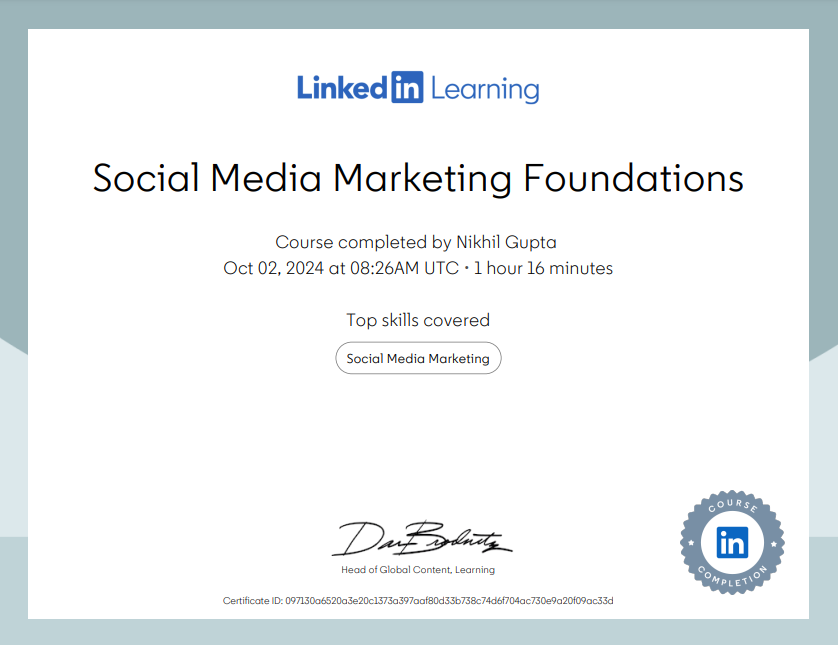
These notes are from the LinkedIn Learning course ‘Social Media Marketing Foundations‘ by Brian Honigman . I highly recommend this course to anyone aspiring to become an Social Media Manager. To access this course and learn from industry experts, consider upgrading to LinkedIn Premium.
Please note that these notes were generated using LinkedIn’s AI tool, and I don’t claim ownership of the content. I’m sharing these notes solely for educational purposes and personal revision. If you have any concerns, please contact me at marketing@youthnet.in.