
The Pillars of Ecommerce
Ecommerce customer research
- Importance of Knowing Your Ideal Customer:
- Forms the basis of your marketing plan.
- Essential for a successful ecommerce marketing campaign.
- Consistent Market Research:
- Stay updated on customer trends.
- Helps in choosing the right product and knowing where to promote it.
- Customer Demographics:
- Includes age, gender, marital status, occupation, and race.
- Helps create customer avatars for targeted marketing.
- Behavioral Characteristics:
- Track online shopping habits, website actions, and social media reactions.
- Use analytics tools like Google Analytics and social media platform analytics.
- Geo-Targeting:
- If products are region-specific, target those regions with your marketing strategy.
- Psychographics:
- Includes customer attitudes, interests, beliefs, and political or religious views.
- Shapes your marketing message.
- Understanding Customer Needs:
- Focus on the needs, wants, and desires of your target customers.
- Inform product development and marketing materials.
- Customer-Centric Marketing Strategy:
- The better you know your customer, the easier it is to sell to them.
- Continuously learn and discover new things about your customers.
Ecommerce product research
- Importance of Product Research:
- Fundamental to know what people are in the market to buy.
- Helps determine what products you should be selling.
- Tools for Product Research:
- eBay:
- Use the search bar to find products and suggested terms.
- Look for listings with high sales (e.g., “7000+ sold”).
- Click on the “sold” button for historical sales data.
- Analyze listings for successful elements like pictures, titles, and descriptions.
- Amazon:
- Check best-selling products and their reviews/ratings.
- Identify gaps in the market for potential improvements.
- Etsy:
- Search for products and check sales and ratings.
- Look for indicators of successful products.
- Google:
- Use auto-suggest to see what people are searching for.
- Look for ad placements to gauge demand.
- YouTube:
- Search for product reviews and analyze views and comments.
- High view counts indicate high interest.
- Google Trends:
- Analyze trends over time for seasonal products.
- Compare keywords and adjust search parameters (e.g., country, time period).
- Google Keyword Planner:
- Identify monthly search volumes for keywords.
- Use suggested keywords for additional insights.
- eBay:
- Analyzing Product Demand:
- Look for indicators of current demand vs. past demand.
- Assess why certain listings are successful and how you can adopt similar strategies.
Ecommerce platform breakdown
- Learning from Bigger E-commerce Brands:
- Amazon’s Business Model:
- Relies heavily on customer retention.
- Focuses on improving the website and overall customer experience to encourage repeat business.
- Customer Lifetime Value:
- Importance of focusing on the lifetime value of customers.
- Enables higher spending on marketing campaigns and saves time and resources.
- Amazon’s Business Model:
- Upselling and Cross-Selling:
- Amazon’s Strategy:
- Recommends products that are similar or complement the product being purchased.
- Improves average order value, enhancing overall profitability.
- Amazon’s Strategy:
- Adopting Successful Marketing Principles:
- Look at what bigger e-commerce brands and niche competitors are doing right.
- Identify and adopt effective marketing principles for your own ecommerce website.
Building a profitable ecommerce website
- User Experience (UX):
- Crucial for maximizing online sales.
- Improves search engine rankings and overall conversion rates.
- Focus on website speed, ease of navigation, and mobile optimization.
- Tools: Google PageSpeed Insights (for load speed) and Mobile-Friendly Test (for mobile optimization).
- Personalized Product Recommendations:
- Recommend products and categories based on user interest.
- Enhances convenience and increases conversion rates.
- Platform Selection:
- Choose a platform that provides the best user experience.
- Consider your company’s specific needs and in-house resources.
- Customer Experience First:
- Prioritize customer experience in all aspects of website creation.
Niche Marketing in Ecommerce
The customer journey in ecommerce
- Understanding the Customer Journey:
- E-commerce is more than just generating one-off sales; focus on the overall customer journey.
- Consider where customers first hear about your product and their stage in the buying cycle when they visit your website.
- Engaging Customers:
- Ensure customers want to return and recommend your products.
- Use content marketing strategies like videos or blogs to answer customer questions and bring them closer to making a purchase.
- Traffic Strategies:
- SEO and Google Ads:
- Utilize search intent-based marketing for products people are actively searching for.
- Interruption Marketing:
- Use Facebook or Instagram ads for innovative products that people aren’t necessarily searching for.
- SEO and Google Ads:
- Retargeting and Email Marketing:
- Use tools like retargeting and email marketing to bring previous visitors back to your site.
- Aim to increase repeat purchases and overall profitability.
Researching your market for ecommerce
- Facebook Audience Insights Tool:
- Access via Facebook Ads Manager.
- Analyze current audience on Instagram and Facebook.
- Breakdown of demographics: gender, age, top countries, and cities.
- Identify similar pages for content ideas and potential collaborations.
- Export data for deeper analysis.
- Assess content performance and reach over time.
- SEMrush:
- Advanced tool primarily for SEO and competitor analysis.
- Analyze your domain or competitors’ domains.
- Key metrics: Authority Score, organic search traffic, paid search terms, backlinks, and display advertising.
- Distribution by country and organic keywords.
- Identify top keywords and competitors.
- Paid plans start at $119/month with a seven-day free trial.
- Similarweb:
- Offers a free plan for basic analysis.
- Provides global, country, and category rank.
- Breakdown of traffic sources: referrals, search, paid, social media, and display advertising.
- Useful for creating effective advertisement campaigns.
Articulating your unique selling point (USP)
- Definition of USP:
- Your USP is what makes your product stand out in the marketplace.
- It should be clearly communicated in your marketing to encourage sales.
- Types of USPs:
- Product Ergonomics:
- Focus on how practical and user-friendly your product is.
- Highlight specific design features that make it easier for customers.
- Price:
- Offering a solution at a cheaper price than competitors.
- Be cautious as lower prices can sometimes be associated with lower quality.
- Compare with competitors to find a competitive yet quality-preserving price point.
- Customer Experience:
- Faster delivery times or longer guarantees than competitors.
- USPs linked to customer service can be as effective as those tied to the product itself.
- Product Ergonomics:
- Communicating Your USP:
- Ensure your USP is prominently featured in all marketing materials.
- Helps differentiate your product from competitors and attract customers.
Sales copy for successful ecommerce
- Focus on Customer Pain Points:
- Customers are more driven away from pain than towards pleasure.
- Identify and address your customer’s pain points in your sales copy.
- Definition of Sales Copy:
- Enticing language that encourages website visitors to take specific actions.
- Can be used in sales pages, email marketing, and online ads.
- Understanding Your Target Customers:
- Get to know what keeps your customers up at night and what frustrates them.
- Use this understanding as the framework for your marketing.
- Incentivizing Purchases:
- Consider timeframes to encourage immediate purchases.
- Create limited-time offers to incentivize buying now rather than later.
- Detailed Product Descriptions:
- Be as detailed as possible in your product descriptions.
- Provide all necessary information to help customers make a buying decision.
- Simplifying the Sales Process:
- Make the purchasing process as simple and straightforward as possible.
- Offer multiple buying options to accommodate different preferences.
- Effective Communication:
- Clearly communicate why customers should buy from you.
- A well-crafted sales copy can significantly boost sales.
Free Traffic Ecommerce
Navigating free traffic in ecommerce
- Importance of Free Traffic:
- Drives new visitors consistently.
- Ensures passive traffic once sources are built effectively.
- Common Forms of Free Traffic:
- SEO (Search Engine Optimization):
- Ability to rank your website in major search engines.
- Key factors: website authority, usability, visitor experience, and keyword relevancy.
- Tips: Ensure website is simple, easy to navigate, and facilitates easy purchases.
- Social Media:
- Builds trust with potential customers.
- Consistent content attracts ideal customers.
- YouTube:
- Similar to social media, builds trust and attracts customers through consistent, quality content.
- SEO (Search Engine Optimization):
- SEO Tips:
- Make your website simple and easy to navigate.
- Facilitate easy purchases to improve SEO and conversion rates.
- Social Media and YouTube Tips:
- Produce content consistently.
- Ensure content educates, inspires, or entertains your target audience.
- Make content discoverable and engaging.
- Respond to comments, go live, and build a community.
- Time and Effort:
- Free traffic requires significant time and effort.
- Building authority in search engines and a following on social media/YouTube can take years.
- Diversify traffic options by running free traffic campaigns alongside other marketing forms.
SEO for ecommerce websites
- SEO as a Journey:
- SEO takes time to show results.
- Search engines prioritize relevant and trustworthy websites.
- Key Factors for SEO:
- User Experience:
- Ensure quick load times.
- Optimize for mobile devices.
- Have an active SSL certificate.
- Make navigation easy and quick.
- Website Authority:
- New websites have less authority.
- Gain authority through backlinks from high-authority sites.
- Relevancy:
- Ensure your website is relevant to the keywords you target.
- Each page should be relevant to its specific keywords.
- Keyword Placement:
- Place keywords in the URL, heading tags (H1, H2), and body text.
- Write primarily for visitors, secondarily for search engines.
- User Experience:
Building brand awareness on social media
- Time and Patience:
- Building a brand on social media requires time, patience, consistency, great content, and discoverability.
- Benefits of Social Media Branding:
- A loyal fan base can become your best customers.
- Quality Content:
- Content should be inspiring, entertaining, or educational.
- Focus on what brings the most value to your customers.
- Platform-Specific Content:
- Identify where your target customers spend their time.
- Create native content for those platforms (e.g., engaging videos for YouTube, varied content types for Instagram).
- Visibility and Discoverability:
- Use hashtags on platforms like Instagram and LinkedIn.
- Collaborate with other creators.
- Use keywords for discoverability on YouTube and blogs.
- Avoid Vanity Metrics:
- Focus on metrics that translate into tangible business results like website visitors and sales, rather than followers or likes.
YouTube marketing for ecommerce
- YouTube’s Importance:
- YouTube is the second largest search engine in the world.
- It is a valuable platform for building an audience and promoting products.
- Keyword Research:
- Use YouTube’s auto-suggest feature to find popular keywords.
- These suggested keywords are based on what users frequently search for.
- Analyzing Content:
- Look at high-view videos to understand popular topics.
- Analyze competitors’ thumbnails and titles to see what works.
- Thumbnails and Titles:
- Thumbnails should be engaging to increase click-through rates.
- Titles must be compelling and include relevant keywords.
- Watch Time:
- Watch time is a crucial metric; longer watch times lead to better video performance.
- Create engaging content to keep viewers watching until the end.
- Keywords in Description and Tags:
- Include target keywords in the video title, description, and tags.
- This helps YouTube understand the content and improves search rankings.
- Going Live:
- Live streaming helps connect and engage with your audience.
- You can save live videos to your channel or choose not to.
- Driving Traffic:
- Use YouTube to answer questions related to your products.
- Funnel traffic from YouTube back to your ecommerce website.
Blogging for ecommerce
- Importance of Blogging:
- More pages on your ecommerce site increase opportunities to be found in search engines.
- Search engines rank individual pages, not entire websites.
- Using answerthepublic.com:
- A tool to find questions people have about your products.
- Type in your product or related queries to get a list of questions your target customers are asking.
- Use these questions as topics for your blog articles.
- You can save these questions as images or download them as a CSV file for content ideas.
- Creating Valuable Content:
- Answer questions that people are asking about your products.
- Link to your products within your blog articles to drive traffic and sales.
- Example: A blog article on “The best football boots for 2021” includes links and prices for recommended products.
- Benefits of Blogging:
- Helps rank higher in search engines.
- Drives traffic and potential customers to your ecommerce site.
- Promotes your product pages through engaging and informative content.
Paid Traffic Ecommerce
Driving paid traffic for ecommerce
- Importance of Paid Traffic:
- Driving paid traffic is a valuable skill for ecommerce brands.
- Different traffic sources can be effective, but some are more widely used than others.
- Traffic Sources:
- Google Ads:
- Search intent-based marketing.
- Can be costly depending on targeted keywords.
- High conversion rates due to user-initiated searches.
- Facebook Ads:
- Effective and has a large reach.
- Ads can also appear on Instagram (owned by Facebook).
- LinkedIn Ads:
- Suitable for targeting professionals in specific industries.
- Ideal for high-end products.
- Solo Ads:
- Less commonly used.
- Involves paying someone to send an email to their list.
- Useful if there is a niche blog in your industry.
- YouTube Video Ads:
- Currently underused.
- Potential first-mover advantage due to less competition.
- Other Platforms:
- Twitter, TikTok, and Pinterest also offer ad opportunities.
- Worth testing if your target customers are on these platforms.
- Google Ads:
- Influencer Marketing:
- Leverage individuals or companies with large social media followings.
- Platforms include YouTube, Instagram, TikTok, and LinkedIn.
- Great for gaining exposure and generating sales.
- Testing and Optimization:
- Initial ads may not be profitable; testing is crucial.
- Test different aspects: audience, ad creative, landing pages, and follow-up emails.
- Retargeting campaigns can improve performance by reaching previous visitors.
- Retargeting:
- Show ads to people who have interacted with your business before.
- Helps improve the effectiveness of paid campaigns.
- Continuous Improvement:
- Consistently test and tweak campaigns.
- Choose the right platforms that resonate with your business.
Paid traffic sources
- Setting a Test Monthly Budget:
- Allocate a specific budget to test the performance of your paid traffic campaigns.
- Ensures you don’t overspend while giving campaigns enough time to show results.
- Types of Paid Traffic Sources:
- Instagram Ads
- Facebook Ads
- LinkedIn Ads
- Influencer Marketing
- Choosing the Right Platform:
- Identify where your target customers spend most of their time online.
- Invest in ads on those platforms to reach your audience effectively.
- Data and Analytics:
- Use data to manipulate and split-test your ads.
- Analyze where you see the best results and make necessary tweaks.
- Pausing Non-Performing Campaigns:
- If campaigns are not yielding positive results, consider pausing them.
- Focus on One Campaign at a Time:
- Concentrate on mastering one paid traffic source before moving on to the next.
- Ensures efficient use of your budget and resources.
- Optimization:
- Continuously test different strategies to see what works best.
- Optimize campaigns based on data and performance metrics.
Influencer marketing for ecommerce
- Benefits of Influencer Marketing:
- Gain exposure to a new audience.
- Influencers have nurtured their audience, making them more likely to purchase based on recommendations.
- Choosing the Right Influencers:
- Work with niche-related influencers who focus on a specific demographic.
- Niche influencers may have fewer followers but higher engagement and relevance to your target audience.
- Avoid focusing solely on vanity metrics like follower count.
- Engagement Metrics:
- Study an influencer’s audience engagement: comments, likes, shares.
- Choose influencers who have the attention of your target customers.
- Affiliate Programs:
- Consider creating an affiliate program for influencers.
- Provide specific links or coupon codes for influencers to earn a percentage of sales they generate.
- This incentivizes influencers to put more effort into promoting your products.
- Long-term Benefits:
- Even after initial promotion, influencers in your affiliate program may continue to promote your products.
- This can lead to sustained promotion and sales over time.
- Brand Representation:
- Ensure influencers represent your brand well.
- Choose influencers who complement your online campaigns.
Attracting affiliates to your ecommerce store
- Concept of Affiliate Marketing:
- Allows others to market your products.
- You only pay affiliates when they successfully generate a sale.
- Examples of Affiliate Programs:
- Amazon Associates Program:
- Affiliates earn money by promoting Amazon’s products.
- Sign-up link found at the bottom of Amazon’s website.
- Barnes & Noble:
- Similar affiliate program with terms and conditions available on their website.
- Amazon Associates Program:
- Setting Up Your Own Affiliate Program:
- Create an affiliate program and provide a sign-up link on your website.
- Tools like LeadDyno can help set up and manage your affiliate program.
- Benefits of Affiliate Marketing:
- Promotes your products through affiliates.
- You only pay for successful sales, minimizing financial risk.
- Attracting Top Affiliates:
- Make it easy for potential affiliates to sign up.
- Provide incentives for influencers to join your affiliate program.
- Offer affiliate links to influencers to encourage them to promote your products.
Increasing Conversions for Ecommerce
Website conversions in ecommerce
- Definition of Conversion:
- A conversion occurs when a visitor takes a desired action on your website, typically making a purchase in the context of ecommerce.
- Conversion Optimization:
- Analyzing how well your web pages convert visitors into sales.
- Using this analysis to improve conversion rates.
- Tools for Analysis:
- Google Analytics:
- Identify traffic sources.
- Determine which platforms convert best.
- Analyze keywords driving the best results.
- Heat Maps:
- Show how visitors interact with your website.
- Identify where users click and where they face difficulties.
- Provide insights for improving conversions.
- Google Analytics:
- Continuous Improvement:
- Constantly seek new ways to improve conversion rates.
- Look for opportunities to enhance your site and make it more effective.
Ecommerce retargeting
- Low Initial Conversion Rates:
- Only a small percentage of visitors convert into customers on their first visit.
- Visitors may need time to decide and can forget about your brand.
- Purpose of Retargeting:
- Keeps your brand top of mind for potential customers.
- Helps build trust as visitors see your brand multiple times.
- Types of Retargeting:
- Pixel Retargeting: Uses cookies to track visitors and show them ads.
- Email Retargeting: Targets users via email campaigns.
- Social Media Retargeting: Targets followers on social media platforms.
- Benefits of Retargeting:
- Known as warm traffic since these users have interacted with your brand before.
- Increases the likelihood of conversions on subsequent visits.
- Case Study:
- A client improved her paid traffic campaign results significantly after adopting retargeting.
- Advanced Retargeting:
- Retarget existing customers to encourage them to purchase higher-value items.
- Helps move customers further down the sales funnel.
- Building Trust:
- Repeated exposure to your brand builds trust.
- The more a visitor sees your offer and trusts you, the more likely they are to make a purchase.
Email marketing for ecommerce
- Importance of Email Marketing:
- Email marketing is crucial for the success of any ecommerce business.
- It helps manage customer data responsibly and legally.
- Abandoned Cart Emails:
- Send reminders to customers who added items to their cart but did not complete the purchase.
- Helps recover potentially lost sales.
- Building a Lead Database:
- Collect emails from prospects who sign up for updates, download lead magnets, or receive discounts.
- Nurture these leads to convert them into customers.
- Past Customers:
- Past customers are often the best customers.
- Regularly email them with product recommendations to encourage repeat purchases.
- Email Segmentation:
- Categorize your email list based on how customers joined, what they bought, and their engagement with emails.
- Send personalized messages to improve open rates, click-through rates, and conversions.
- Ongoing Engagement:
- Email marketing is about turning visitors into repeat customers.
- Consistently keep in touch with your audience through email to market your website.
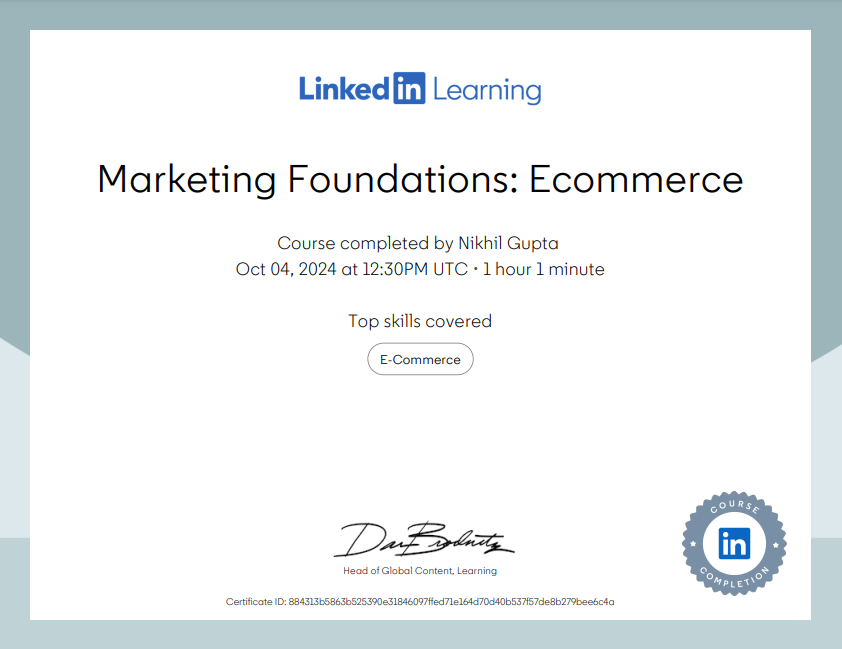
These notes are from the LinkedIn Learning course ‘Marketing Foundations: Ecommerce‘ by Sam Dey. I highly recommend this course to anyone aspiring to become an Ecommerce Marketing Expert. To access this course and learn from industry experts, consider upgrading to LinkedIn Premium.
Please note that these notes were generated using LinkedIn’s AI tool, and I don’t claim ownership of the content. I’m sharing these notes solely for educational purposes and personal revision. If you have any concerns, please contact me at marketing@youthnet.in.