
Creating a Content Strategy
Setting strategic goals
- Importance of Content Marketing Strategy:
- Many businesses produce content that gets lost or ignored.
- A content marketing strategy helps create remarkable content that reaches customers.
- The strategy should map out the “who, what, when, where, why, and how” of content marketing.
- Purpose of the Strategy:
- Sets up a framework for making purposeful decisions.
- Helps in setting business goals to guide decisions at every step.
- Makes it easier to set priorities, plan campaigns, and collaborate with others.
- Defining Strategic Goals:
- Goals should be clear from the beginning.
- A strategic goal is meaningful, easy to understand, and straightforward to measure.
- Common goals include establishing thought leadership, improving customer loyalty, demand generation, increasing sales, audience development, and earning brand awareness.
- Types of Goals:
- Ongoing Goals:
- Measure results on a regular basis without an end date.
- Example: Measuring engagement from weekly articles by tracking time spent on the website monthly.
- Campaign Goals:
- Related to time-sensitive activities with a defined start and stop date.
- Example: Generating 300 leads from a three-month campaign involving case studies and executive interviews.
- Ongoing Goals:
- Key Takeaway:
- A solid content marketing strategy with clearly defined goals increases the likelihood of achieving desired outcomes
Defining your audience
- Importance of Knowing Your Audience:
- Essential to identify who your audience is, what they want, and how to serve their needs with your content.
- Avoid targeting too broadly; focus on a specific customer base for better personalization.
- Creating Customer Personas:
- Develop profiles of your customers based on demographics, motivations, challenges, and mindset.
- Aim for 2-5 personas that reflect the specific groups within your customer base.
- Use research and observations to build these personas.
- Benefits of Customer Personas:
- Helps in making informed decisions about content topics, images, and types.
- Increases chances of content resonating with the audience, creating a positive connection, and driving action.
- Example of Customer Persona:
- An online investment company created a persona named “the up-and-comer” for young professionals (25-30 years old) setting up their financial plans.
- This persona helped the company tailor their videos and social media messages to provide helpful investing recommendations without complicated jargon.
- Methods to Define Your Audience:
- Conduct interviews, reference research studies, run focus groups, or review existing customer data
Choosing the Right Topics
Finding relevant topic ideas
- Challenges in Choosing Topics:
- With numerous options, it can be overwhelming to decide which subjects your customers care about the most.
- Publishing content that doesn’t resonate with your audience can lead to frustration.
- Techniques for Finding Relevant Topics:
- Reference Customer Personas:
- Focus on the challenges faced by your customers.
- Example: An agricultural equipment company might identify increasing crop yield and limiting expenses as key challenges.
- Research these challenges to create relevant content like webinars, e-books, or articles.
- Align with Organizational Expertise:
- Ensure topics are related to your organization’s expertise or products/services.
- Irrelevant topics can confuse your audience about what your organization does.
- Analyze Customer Feedback:
- Pay attention to patterns in questions and feedback from customers.
- Common questions or pain points can be great starting points for content.
- Use behavioral data from analytics tools, CRM, or POS systems to identify what content engages your audience the most.
- Review Existing Content:
- Look for gaps in what’s already been published by competitors.
- Example: A competitor’s brief video on a topic might be an opportunity for you to create a more in-depth piece.
- Reference Customer Personas:
- Key Takeaway:
- Use these techniques to identify topics that matter to your customers and align with your organization’s strengths.
Organizing topics into categories
- Purpose of Organizing Topics:
- Helps your organization become known for its expertise.
- Creative constraints streamline decision-making and focus efforts.
- Creating Categories:
- Limit topics to a select group of categories.
- Categories should be specific enough for clear focus but broad enough to cover many topics.
- Example: An art supplies company might have categories like scrapbooking, home decor projects, kids crafts, and seasonal activities.
- Benefits of Categories:
- Ensures content creation is focused on relevant topics.
- Helps customers remember your brand through consistent themes.
- Example: Chase Bank’s blog categories include personal finance, tips for better life experiences, financial strategies for small businesses, innovative business leaders, and community support stories.
- Choosing Categories:
- Create 3-5 categories based on customer personas, feedback, and research.
- Look for patterns in customer interests to logically group topics.
- SEO Benefits:
- Organizing content by categories improves search engine visibility.
- Consistent publishing within categories helps Google understand your expertise areas.
- Flexibility:
- Categories can evolve with your company’s direction but should be maintained long-term for consistency.
- Key Takeaway:
- Categories may feel limiting initially, but they enhance focus and streamline content creation.
Producing Content
Tips for successful storytelling
- Definition of Storytelling:
- Storytelling isn’t selling; it’s about sharing information by conveying emotions, experiences, and perspectives to address a core message.
- Businesses can use storytelling to share valuable information with customers, attracting and engaging them on topics they care about.
- Core Message:
- Identify the core message you want to communicate about a topic.
- The core message is the purpose behind the topic and the main takeaway for the audience.
- Example: An article on climate change’s impact on employment might focus on lesser-known consequences.
- Type of Story:
- Decide on the type of story that will effectively convey the topic and core message.
- Educational: A how-to resource might be appropriate.
- Entertaining: A humorous tone can make serious or dull topics more engaging.
- Values-driven: Highlighting a partnership that represents the company’s mission.
- Content Structure:
- Ensure the story has a defined beginning, middle, and end.
- A clear structure helps the audience understand the core message and can evoke an emotional response.
- Inclusion of Characters:
- Include characters to add a human element and showcase different experiences and perspectives.
- Example: Cleveland Clinic’s podcast features interviews with healthcare professionals sharing personal perspectives, making complex topics less intimidating.
- Key Takeaway:
- Follow these storytelling tips to improve the quality of your content and build loyalty and trust with your audience.
Selecting the right type of content
- Importance of Content Formats:
- Choose content formats that make your message easy to comprehend, align with customer preferences, and match your skills and resources.
- Types of Written Content:
- Blog posts, long-form articles, case studies, white papers, reports, emails, print magazines, and e-books.
- Widely used as every organization needs to write to share information.
- Visually-Focused Content:
- Videos, infographics, images, and presentations.
- Ideal for simplifying complex ideas into digestible concepts.
- Interactive Content:
- Tools, webinars, quizzes, polls, and social media.
- Allows direct engagement with the information being shared.
- Audio Content:
- Podcasts, audiograms, and skills for smart speakers.
- Effective at building deep relationships with customers.
- Choosing the Right Format:
- Consider where and how your audience consumes content (e.g., at work vs. on the go).
- Research which channels your audience is active on and their preferred content types.
- Example: Executives prefer data visualizations, photography, and charts, and are most active on LinkedIn.
- Organizational Skills and Resources:
- Choose content types your team has the skills and resources to execute effectively.
- Avoid creating mediocre campaigns; focus on impactful content you can produce well.
- Key Takeaway:
- Select content formats that align with your message and the preferences of your target audience, ensuring a seamless experience for them.
Optimizing Content
Formatting content for a frictionless experience
- Impact of Poor Formatting:
- Poor formatting can negatively impact the user experience, deluding the message and limiting effectiveness.
- Examples include inconsistent audio levels in podcasts or unreadable text on mobile devices.
- Three Key Considerations for Effective Formatting:
- Understand Formatting Nuances:
- Tailor formatting to the type of content (e.g., short paragraphs and subheaders for online articles).
- Increases readability and helps users find information easily.
- Learn best practices through research and testing.
- Meet Audience Expectations:
- Ensure titles, descriptions, and content live up to their promises.
- Avoid misleading headlines to maintain trust.
- Example: Patch, an online plant company, uses descriptive trailers on social media to promote their courses, featuring the instructor to build credibility.
- Include Calls-to-Action (CTAs):
- Use CTAs to guide users to related content, enhancing engagement.
- Example: Encourage users to watch a related video or read a similar article.
- Helps in providing continuous value and increasing return visits.
- Understand Formatting Nuances:
- Review Process:
- Implement a review process where content is checked by multiple team members to catch formatting errors.
- Key Takeaway:
- Proper formatting ensures a smooth user experience, making content more effective and engaging.
Formatting content for distribution
- Proactive Distribution:
- Plan ahead to increase visibility for your campaigns.
- Format content with search engines and social media in mind before publishing.
- Search Engine Optimization (SEO):
- Importance of Search Traffic:
- 68% of measurable website traffic comes from organic and paid search.
- Keyword Integration:
- Include keywords naturally and consistently throughout the content.
- Use keywords in the title, body, URL, and subheaders.
- Example: Lowe’s blog post on “how to install a tile backsplash” includes the keyword “tile backsplash” four times in a conversational manner.
- Beyond Written Content:
- Apply keyword strategies to videos on YouTube and podcasts on iTunes.
- Importance of Search Traffic:
- Social Media Optimization:
- Encouraging Shares:
- Highlight key takeaways in articles and reports for sharing.
- Remind podcast listeners of your social media presence.
- Technical Optimization:
- Use Facebook’s Open Graph markup and Twitter Cards to ensure correct display when shared.
- Call-to-Actions (CTAs):
- Include social media-related CTAs within videos or descriptions to encourage sharing.
- Encouraging Shares:
- Key Takeaway:
- Embrace these tactics to ensure your content earns the visibility it deserves on both search engines and social media.
Distributing Content
Promoting with owned and shared media
- Introduction to Distribution:
- After producing content, focus on distribution to ensure customers see and interact with it.
- Use an integrated approach through the PESO model (Paid, Earned, Shared, and Owned media).
- Owned Media:
- Content your organization fully owns, such as articles, reports, or videos on your website.
- Prioritize promoting owned media as you control the entire experience.
- Example: An advertising campaign on Twitter (paid media) driving traffic to a research report on your website (owned media).
- Shared Media:
- Content on social media co-produced by the company and consumers.
- Example: An Instagram post shared by the company, with audience comments and shares adding their perspectives.
- User-generated content is a form of shared media, trusted for its authenticity.
- Encourage shared media by asking for opinions, featuring customers in campaigns, hosting contests, or creating hashtags.
- Key Takeaway:
- Use owned media to control the experience and shared media to engage and build trust with your audience.
Promoting with earned and paid media
- Earned Media:
- Definition:
- Content about a company that they didn’t produce or pay for.
- Results from free publicity via publications, bloggers, podcasts, influencers, and other news sources.
- Forms of Earned Media:
- News articles, social media mentions from influential accounts, cable news segments, podcast interviews, customer reviews.
- Benefits:
- Gets your content in front of an audience already interested in the topic.
- Example:
- Pitching a new research study to trade publications for coverage.
- Techniques:
- Build relationships with credible industry players to gain earned media.
- Definition:
- Paid Media:
- Definition:
- Paying to amplify content or have it created by a third party.
- Types of Paid Media:
- Pay-per-click advertising, influencer marketing, social media ads, native advertising, podcast ads, display advertising.
- Benefits:
- Boosts content to reach more of the right people, less intrusive than direct promotional messaging.
- Example:
- Advertising content on YouTube and Facebook to introduce products to a wider audience.
- Definition:
- Integrated Approach:
- PESO Model:
- Paid, Earned, Shared, and Owned media work together to enhance content distribution.
- Case Study:
- A client used the PESO model to increase content viewership and sales.
- Produced educational articles, sent products to YouTube influencers (earned media), and advertised on YouTube and Facebook (paid media).
- PESO Model:
- Key Takeaway:
- Combining earned and paid media can significantly extend the reach and impact of your content.
Integrating Content
Integrating content across departments
- Adaptability of Content Marketing:
- Content marketing can benefit departments beyond marketing, such as customer service, sales, HR, and the C-suite.
- It helps departments achieve their goals, like attracting applicants or answering repeat questions.
- Role of Marketing Team:
- Identify opportunities to integrate content across the company.
- Partner with stakeholders to plan and execute content effectively.
- Highlight direct benefits to other teams to gain their buy-in.
- Departmental Benefits:
- Customer Service:
- Create product guides to reduce customer service requests by providing self-help resources.
- Public Relations:
- Collaborate on content ideal for pitching to trade publications or media outlets to earn more exposure.
- C-suite:
- Work with marketing to author content like articles or podcasts to position the organization as a thought leader.
- Human Resources:
- Produce content showcasing company culture and employee stories to attract like-minded candidates.
- Internal Communications:
- Support in producing content to inform employees about company developments.
- Customer Service:
- Key Takeaway:
- Think outside the box to identify unique opportunities for partnering across departments to maximize the value of content marketing.
Repurposing content to earn more benefits
- Concept of Repurposing:
- Repurposing content involves reusing information from existing resources and sharing it in different formats.
- It’s not about publishing the same content again but repackaging it in a new way.
- Examples of Repurposing:
- Grouping blog posts into an e-book.
- Turning a YouTube video into shorter clips for Instagram and Twitter.
- Writing an article based on a video transcript.
- Benefits of Repurposing:
- Maximize Resource Use:
- Utilize previously allocated resources for creating content.
- Gain more traction from existing investments.
- Reach a Wider Audience:
- Some audience members may have missed the original content.
- Different formats appeal to different audience preferences.
- Maximize Resource Use:
- Identifying Content for Repurposing:
- Review existing content to find relevant and high-performing pieces.
- Use tools like Google Analytics to identify content that drove conversions.
- Tools like BuzzSumo can help find the most shared content on social media.
- Criteria for Repurposing:
- Choose content with enough in-depth information to warrant republishing.
- Prioritize content that has performed well and is still relevant.
- Examples of Suitable Content:
- Lengthy articles or white papers can be repurposed into social media posts, videos, and infographics.
- Avoid repurposing short content like tweets or 20-second videos due to insufficient material.
- Approach to Repurposing:
- Commonly, written content is repurposed into visuals and vice versa.
- This provides two distinct ways of sharing the same information.
- Key Takeaway:
- Repurposing content helps maximize the impact of your existing resources and reach a broader audience by presenting information in various formats.
Measuring Content
Attributing content actions to results
- Importance of Measurement:
- Definitive, measurable results are crucial to understand the impact of content marketing and to decide future investments.
- Components of a Successful Measurement Framework:
- Choosing Metrics:
- Pair metrics with content goals.
- Metrics indicate progress in achieving goals (e.g., engaged users, email subscribers, social shares).
- Example: First Round used metrics like website engagement and social shares to measure awareness among entrepreneurs.
- Pair 3-5 metrics per goal to focus on profitability and actionable insights.
- Selecting Measurement Tools:
- Use a mix of tools for a comprehensive view.
- Examples: Google Analytics, BuzzSumo, SEMrush, Parse.ly.
- Each tool offers different features; using multiple tools provides a complete picture.
- Reporting:
- Create reports on goals and metrics for each campaign.
- Example: Google Analytics report on website traffic.
- Reports should have a singular purpose (e.g., summarizing YouTube channel performance).
- Decide report frequency based on its purpose and stakeholders’ needs.
- Analyzing Reports:
- Analyze reports to understand what’s working, what’s not, and what’s exceeding expectations.
- Determine effective distribution channels and resonating topics.
- Example: Identify which content drives traffic and conversions.
- Choosing Metrics:
- Additional Resource:
- For more details on content measurement, consider watching the “Content Marketing ROI” course by the same instructor.
- Key Takeaway:
- Embrace a structured measurement framework to understand and enhance the impact of your content marketing efforts.
Innovating with Content
Conveying thought leadership with content
- Audience Determines Thought Leadership:
- Your organization doesn’t decide if content is thought leadership; the audience does.
- Readers, listeners, and viewers make the call based on their perception.
- Consistency is Key:
- Publish content consistently over the long term to build recognition.
- Multiple interactions with your content help associate your organization with specific expertise.
- Focused Topics:
- Maintain a consistent set of topics to make it easier for the audience to understand your expertise.
- Example: IBM publishes content on artificial intelligence and cloud computing to position itself as a leader in these areas.
- Providing the Best Answers:
- Aim to provide the best answers to your customers’ important questions.
- This could mean in-depth articles, infographics, or videos that cover complex concepts thoroughly.
- Exclusive Information:
- Include exclusive insights from subject-matter experts or data from recent surveys.
- Example: The National Association of Realtors created a guide with advice from real estate experts, positioning them as a go-to resource.
- Key Takeaway:
- By consistently publishing focused, high-quality content and including exclusive insights, you can effectively convey thought leadership and signal your authority to customers.
The key to the quality versus quantity debate
- Quality vs. Quantity:
- Both quality and quantity are equally important in content marketing.
- High-quality content builds affinity with your audience.
- Consistent quantity keeps your audience engaged and prevents them from forgetting you.
- Content Series Approach:
- A content series or show involves regularly publishing related articles, podcasts, visuals, or videos around a key theme.
- Each piece is useful on its own but builds momentum for the entire series, similar to a Netflix series.
- Benefits of a Content Series:
- Helps set parameters for content quality and frequency.
- Establishes guidelines for formatting, topic choices, time, budget, and resources.
- Ensures a clear understanding of production expectations and quality standards.
- Example:
- Mailchimp’s “Outer Monologue” series features public figures sharing personal and professional experiences, helping businesses and creatives see how others approach challenges.
- Starting Your Own Series:
- Select a concept meaningful to your organization, interesting to your customers, and related to what you do.
- The concept should be specific enough to be valuable but broad enough to cover different topics.
- Key Takeaway:
- Creating a content series is an effective way to balance quality and quantity, ensuring high-caliber content that keeps your audience coming back.
Experimenting beyond best practices
- Understanding Best Practices:
- Best practices are the results of successful experiments.
- They are useful for starting with content marketing but can become less effective over time if solely relied upon.
- Importance of Experimentation:
- Experimenting helps discover new best practices tailored to your specific needs.
- It involves testing changes, from small details like blog post timing to larger initiatives like launching a series on a new platform.
- Areas to Experiment:
- Non-Performing Content:
- Significantly alter campaigns to find what works.
- Example: If blog posts aren’t performing, try different content types like videos or podcasts.
- Improving Content:
- Experiment with content that performs well but has room for improvement.
- Example: If a video series drives sign-ups but not enough to justify costs, test different topics, promotion methods, or design elements.
- Successful Content:
- Enhance already successful content to increase its impact.
- Example: If a podcast is a leading source of conversions, experiment with more episodes or different formats.
- Non-Performing Content:
- Gathering Data:
- Collect data to measure the success of experiments.
- Focus on meaningful metrics like conversions, opens, clicks, or shares.
- Ensure results are statistically significant to make informed decisions.
- Key Takeaway:
- Consistent experimentation is crucial to improve content marketing programs and engage customers effectively.
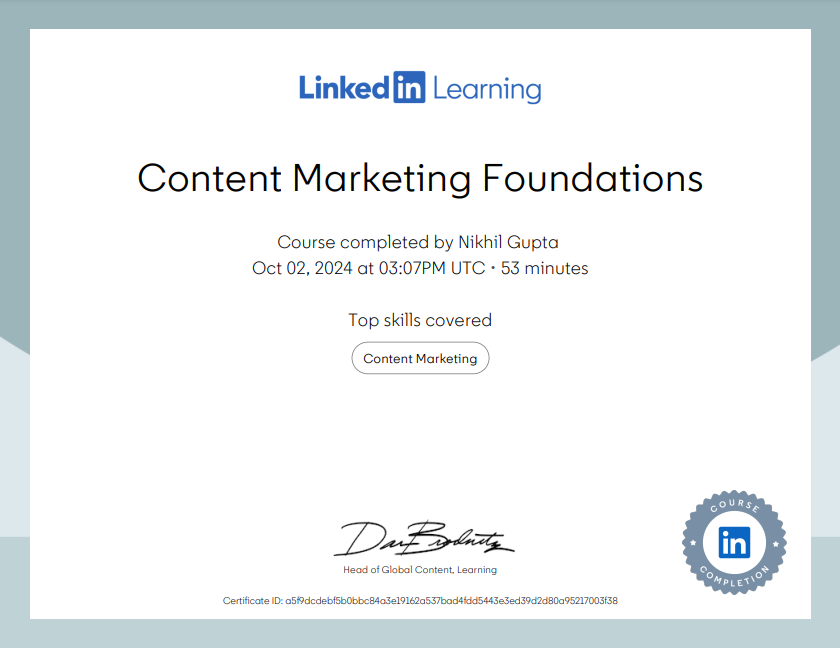
These notes are from the LinkedIn Learning course ‘Content Marketing Foundations‘ by Brian Honigman. I highly recommend this course to anyone aspiring to become an Content marketing Professional. To access this course and learn from industry experts, consider upgrading to LinkedIn Premium.
Please note that these notes were generated using LinkedIn’s AI tool, and I don’t claim ownership of the content. I’m sharing these notes solely for educational purposes and personal revision. If you have any concerns, please contact me at marketing@youthnet.in